

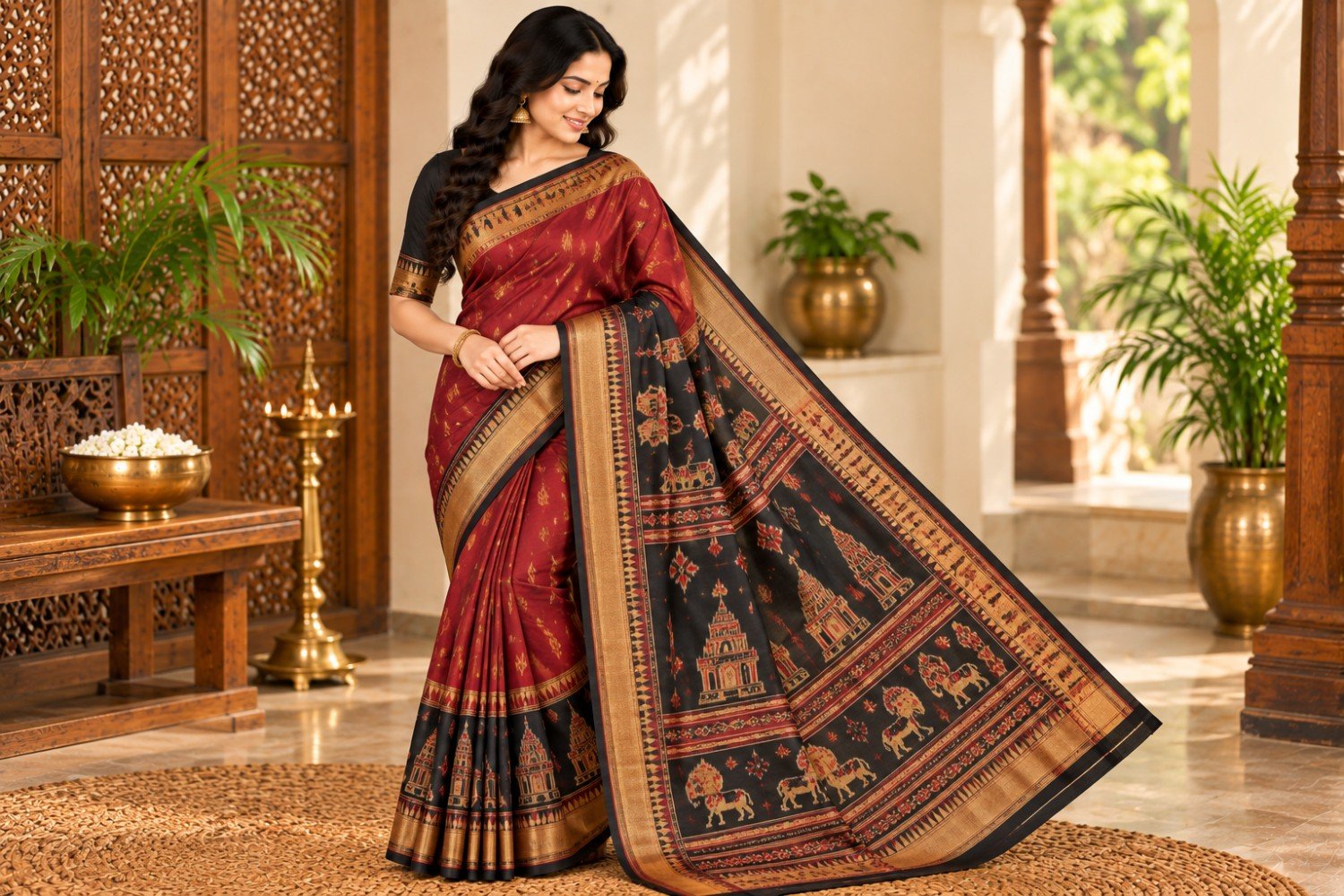
The Timeless Beauty of Odisha Handloom Sarees
Where Every Thread Tells a Story
In a world of fast fashion and machine-made fabrics, there is something truly special about a saree that carries the touch of human hands. Odisha's handloom tradition is one such treasure—a living legacy woven with culture, heritage, artistry, and generations of craftsmanship.
For centuries, the weavers of Odisha have transformed simple threads into masterpieces that reflect the state's rich history, spiritual traditions, and artistic excellence. From the vibrant patterns of Sambalpuri sarees to the natural beauty of Kotpad weaves, every Odisha handloom saree tells a unique story.
More than just clothing, these handwoven creations represent identity, elegance, and a deep connection to India's textile heritage. Today, as people increasingly seek authenticity and sustainable fashion, Odisha handlooms continue to stand out for their beauty, premium feel, and timeless appeal.
What Makes Odisha Handloom So Unique?
Odisha is home to some of India's most celebrated weaving traditions. The state's handloom industry has been nurtured over generations, with weaving skills passed down from parents to children, preserving techniques that are often centuries old. Odisha's handwoven textiles are recognized for their depth of design, cultural symbolism, and remarkable craftsmanship.
Unlike mass-produced fabrics, handloom sarees are created through painstaking manual processes. Every motif, border, and pattern is carefully woven, giving each saree its own character and individuality.
What truly sets Odisha handlooms apart is their ability to combine:
-
Traditional artistry
-
Cultural symbolism
-
Natural materials
-
Exceptional craftsmanship
-
Lasting elegance
Takeaway: Odisha handloom sarees are not simply garments; they are wearable pieces of art rooted in centuries of tradition.
A Heritage Woven Through Generations
The story of Odisha handloom is closely connected to the state's culture, temples, and communities. Many weaving traditions evolved around religious practices and royal patronage, creating designs inspired by mythology, nature, and local life.
Across weaving clusters such as Sambalpur, Nuapatna, Berhampur, Sonepur, Kotpad, and Gopalpur, artisans continue to preserve age-old techniques while adapting to contemporary tastes. The result is a textile tradition that remains relevant without losing its authenticity.
Every handwoven saree reflects countless hours of dedication. The precision required for dyeing, designing, and weaving ensures that no two pieces are exactly alike.
Takeaway: The value of Odisha handloom lies not only in the final product but also in the generations of knowledge woven into every thread.
Exploring the Different Types of Odisha Handloom Sarees
Sambalpuri Sarees

Among the most recognized handlooms of Odisha, Sambalpuri sarees are famous for their intricate Bandha or Ikat weaving technique. In this process, both warp and weft threads are tie-dyed before weaving, creating distinctive geometric and symbolic patterns. Traditional motifs often include flowers, conch shells, and wheels inspired by Odia culture.
Their vibrant colours and detailed craftsmanship make Sambalpuri sarees a symbol of Odisha's textile excellence.
Khandua Sarees

Khandua sarees are considered the pride of Odisha. Traditionally woven in Nuapatna using silk, these sarees hold a special connection with Lord Jagannath and the temple traditions of Puri. Many Khandua sarees feature sacred motifs and intricate designs that blend spirituality with elegance.
Their graceful appearance makes them a favourite choice for festive and ceremonial occasions.
Bomkai Sarees

Also known as Sonepuri sarees, Bomkai sarees beautifully combine traditional weaving with artistic detailing. They are known for elaborate borders, richly decorated pallus, and motifs inspired by tribal art, nature, and folklore. Available in both cotton and silk, Bomkai sarees offer a perfect balance of tradition and contemporary appeal.
Berhampuri Sarees

Berhampuri or Berhampur Patta sarees are celebrated for their lustrous silk, vibrant colours, and refined elegance. These sarees have long been associated with Odisha's rich weaving heritage and continue to be valued for their sophisticated appearance. They are also among Odisha's recognized GI handloom products.
Kotpad Sarees
Kotpad sarees stand apart because of their use of natural vegetable dyes. Traditionally woven by tribal communities, these sarees feature earthy shades and nature-inspired motifs. Their eco-friendly production process and organic appeal make them highly sought after by lovers of sustainable fashion.
Maniabandha Sarees
Where Every Thread Tells a Story
In a world of fast fashion and machine-made fabrics, there is something truly special about a saree that carries the touch of human hands. Odisha's handloom tradition is one such treasure—a living legacy woven with culture, heritage, artistry, and generations of craftsmanship.
For centuries, the weavers of Odisha have transformed simple threads into masterpieces that reflect the state's rich history, spiritual traditions, and artistic excellence. From the vibrant patterns of Sambalpuri sarees to the natural beauty of Kotpad weaves, every Odisha handloom saree tells a unique story.
More than just clothing, these handwoven creations represent identity, elegance, and a deep connection to India's textile heritage. Today, as people increasingly seek authenticity and sustainable fashion, Odisha handlooms continue to stand out for their beauty, premium feel, and timeless appeal.
What Makes Odisha Handloom So Unique?
Odisha is home to some of India's most celebrated weaving traditions. The state's handloom industry has been nurtured over generations, with weaving skills passed down from parents to children, preserving techniques that are often centuries old. Odisha's handwoven textiles are recognized for their depth of design, cultural symbolism, and remarkable craftsmanship.
Unlike mass-produced fabrics, handloom sarees are created through painstaking manual processes. Every motif, border, and pattern is carefully woven, giving each saree its own character and individuality.
What truly sets Odisha handlooms apart is their ability to combine:
- Traditional artistry
- Cultural symbolism
- Natural materials
- Exceptional craftsmanship
- Lasting elegance
Takeaway: Odisha handloom sarees are not simply garments; they are wearable pieces of art rooted in centuries of tradition.
A Heritage Woven Through Generations
The story of Odisha handloom is closely connected to the state's culture, temples, and communities. Many weaving traditions evolved around religious practices and royal patronage, creating designs inspired by mythology, nature, and local life.
Across weaving clusters such as Sambalpur, Nuapatna, Berhampur, Sonepur, Kotpad, and Gopalpur, artisans continue to preserve age-old techniques while adapting to contemporary tastes. The result is a textile tradition that remains relevant without losing its authenticity.
Every handwoven saree reflects countless hours of dedication. The precision required for dyeing, designing, and weaving ensures that no two pieces are exactly alike.
Takeaway: The value of Odisha handloom lies not only in the final product but also in the generations of knowledge woven into every thread.
Exploring the Different Types of Odisha Handloom Sarees
Sambalpuri Sarees